Collaboration and Inclusivity
We believe that great science is a collaborative effort. By bringing together diverse perspectives and fostering an inclusive environment, we create a space where everyone feels empowered to contribute their best work.
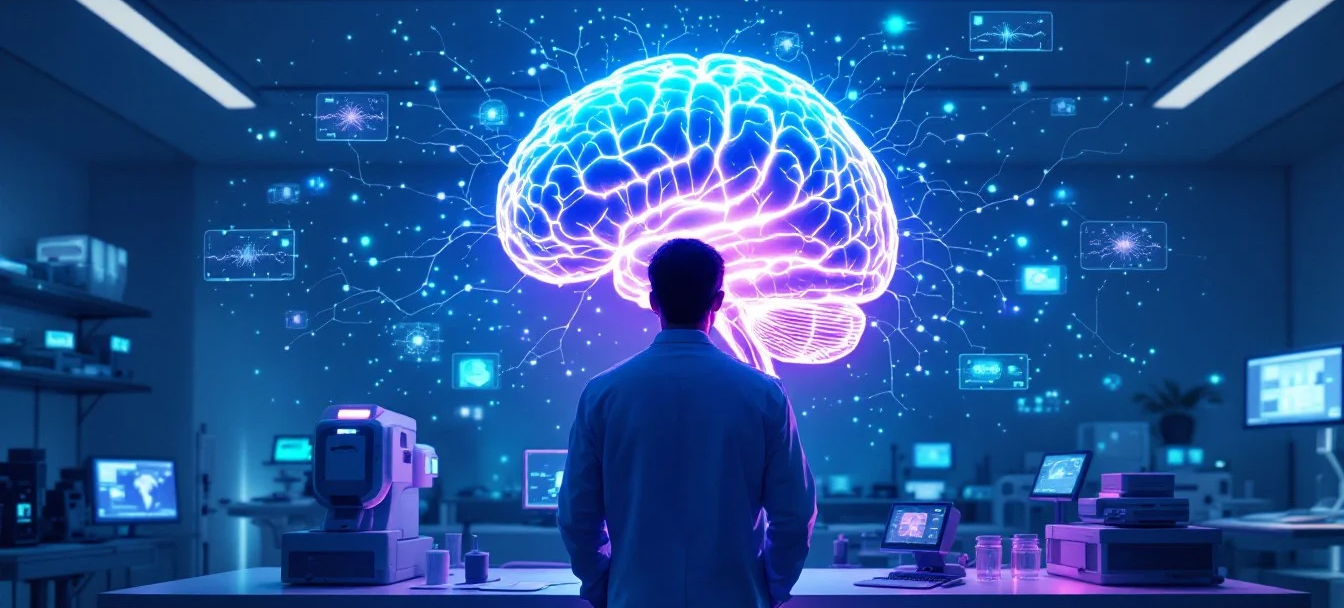
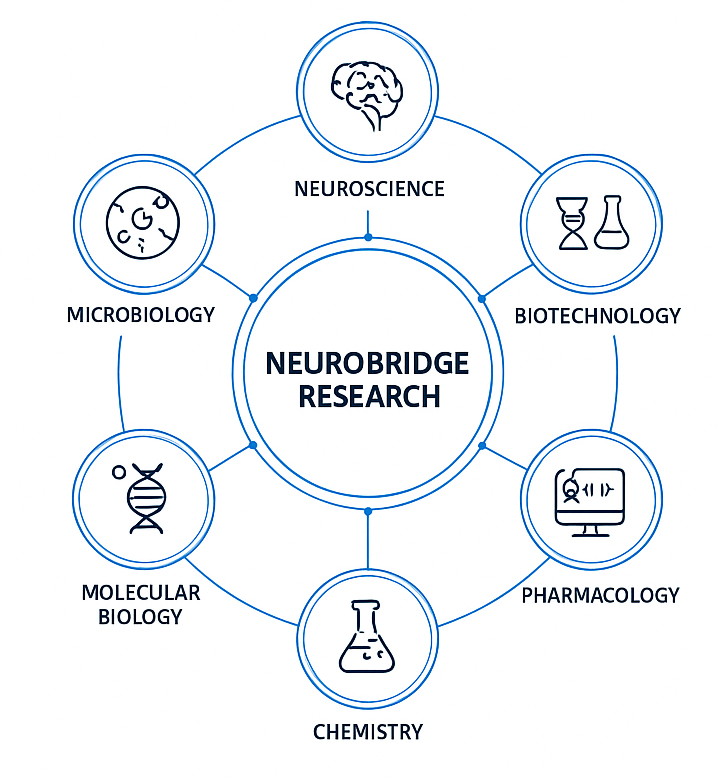
At Neurobridge Research, we connect science and innovation across seven key disciplines: Neuroscience, Microbiology, Molecular Biology, Chemistry, Pharmacology, Bioinformatics, and Biotechnology. By integrating expertise from these diverse fields, we foster interdisciplinary collaboration, advance scientific discovery, and develop innovative solutions that address critical challenges in health and life sciences. Our mission is to bridge knowledge, inspire innovation, and translate research into meaningful impact for society.
We believe that the most transformative scientific breakthroughs emerge at the intersection of disciplines. By bringing together researchers, educators, healthcare professionals, and industry experts, Neurobridge Research creates a collaborative ecosystem where ideas can be shared, refined, and transformed into practical applications. Our interdisciplinary approach enables us to explore complex biological systems, uncover novel therapeutic targets, develop advanced technologies, and accelerate the translation of research findings into real-world solutions.

We believe that great science is a collaborative effort. By bringing together diverse perspectives and fostering an inclusive environment, we create a space where everyone feels empowered to contribute their best work.

We are driven by a commitment to innovation. Our work isn't just about discovery; it's about translating groundbreaking research into practical solutions that have a meaningful and lasting impact on the world.

We are dedicated to empowering the next generation of scientists. Through our extensive training programs, we provide students and young researchers with the skills and knowledge they need to become leaders in the field of bioscience.
Renal–Glymphatic Crosstalk: Molecular, Vascular, and Astroglial Pathways Linking Chronic Kidney Dysfunction to Impaired CNS Proteostasis and Neurodegenerative Vulnerability.

Random Forest-Based Predictive Algorithm for Early Diabetes Detection Using the Pima Indian Dataset and a Sample from the Bangladeshi Population.
Neuroimmunology of Oral Cancer: Tumor Progression, Systemic Inflammation, and Neural Circuit Dysfunction from the Cerebellum to the Frontal Cortex.
Advances in Tissue Engineering for Regenerative Medicine: Bridging Science, Technology, and Clinical Translation.
Statistical Meta-Analysis in Neuroscience: Quantitative Insights, Methodological Challenges, and Future Directions.
Fermented Foods to Foodborne Pathogens: How Food Microbiology Shapes Human Neurobiology.
Neuroimmunology of Oral Cancer: Tumor Progression, Systemic Inflammation, and Neural Circuit Dysfunction from the Cerebellum to the Frontal Cortex.
Effect of Lipoproteins on Atherosclerosis in the Young Population of Bangladesh: A Cardiometabolic and Molecular Perspective.
The Brain–Heart Axis: Neural Mechanisms Linking Stress, Inflammation, and Cardiovascular Diseases.
The Microbiology of Hepatitis: Integrating Viral Pathogenesis, Host–Microbiome Interactions, and Translational Therapeutic Advances.
Neural Regeneration Pathways: The Hidden Role of Extracellular Vesicles in Post-Injury Brain Plasticity.
Retinal Biomarkers as Early Indicators of Alzheimer’s and Parkinson’s Disease.
Wearable Neural Biosensors for Early Detection of Neurodegenerative Biomarkers.
The Role of Astrocytic Glutamate Transporters in Mood and Cognitive Disorders.
Mitochondrial DNA Mutations and Synaptic Dysfunction: A Molecular Bridge to Neurodegenerative Disorders.